meta

4 Categories Aluminium Wheels Take the Prize Over Steel In For Lower Maintenance Costs

Experts love to dissect the topic of which wheel is better – Steel or Aluminium. They can be heard citing the various differences between the two metals, the advantages and disadvantages of each, right down to their respective manufacturing processes and performance out in the field.

The weight difference, of course, is the most obvious one. For example: the Alcoa Ultra ONE® 22.5” x 8.25” wheel weighs in at just 18kg vs an equivalent steel wheel at 28-37kg, and if you put that into a Payload Calculator you’ve looking at some pretty interesting numbers!

Another strong argument for aluminium wheels is in the lowered maintenance costs they bring to the table.

The impact of choosing steel over aluminium on maintenance expenditure, such as cost of refurbishing wheels, repairing damage, and replacing tyres and brakes prematurely is an important consideration when assessing ROI over the lifetime of heavy-duty equipment.

Wheel-offs cost businesses in time that trucks are off the road and not hauling loads, they cost in repair shop charges, and they cost in employee wages that could be paid towards more productive income-generating endeavours.

Here are 4 categories of maintenance benefits that Alcoa Wheels take the prize in over steel wheels:

1. Refurbishing

Because steel wheels generally require continuous refurbishing, such as removing rust, re-painting, touching up or other labour-intensive steps, many fleets need to include refinishing of steel wheels as part of their regular truck maintenance schedule.

Aluminium wheels, on the other hand, come up like new with a simple polish and, depending on the finish of the wheel, sometimes no polish at all.

The savings in workshop labour costs are increased by removing the need to purchase paint, rust remover, or to outlay large sums for powder-coating and its ongoing maintenance.

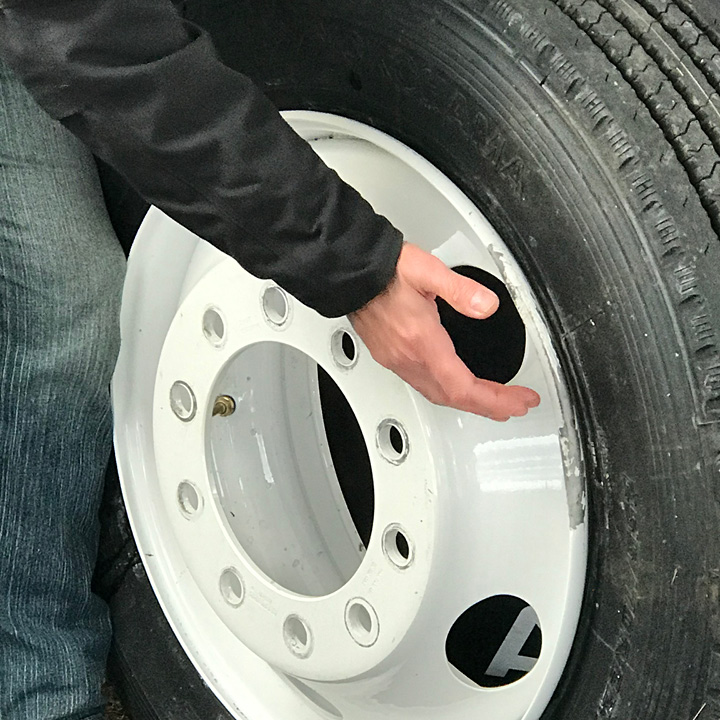
Hand pointing to a white painted steel truck wheel rim

Because aluminium wheels are not painted like steel wheels, the cost savings recuperated from eliminating the need for spray paint and touch up are favourable.

“Every year equipment managers who are working with steel wheels in harsh environments have to dismount tyres, paint or touch up and then remount tyres in order to avoid the common rusty appearance found on many steel wheels,” says Ross Simmons, Managing Director for Howmet Wheel Systems, distributor of Alcoa Wheels in Australia.

2. Weathering Harsh Environments

By their very nature, truck and trailer wheels spend their entire lives exposed to the elements, and in many cases in Australia, in harsh and even hostile environments.

Steel wheels are well-known for flaking, chipping, or corrosion issues that the salt, road grime, and other outdoor elements can cause with each rotation of a wheel. The debris on the road and gravel on country and outback roads may also create damage that requires repairing.

Technologies today have advanced from liquid painting of steel wheels to powder coating that creates a non-porous surface that shields the wheels so there’s less overall damage from truck wheels being exposed in harsh environments than previously experienced.

Aluminium is durable from the start if properly maintained (thus without needing to be powder-coated), and now Alcoa Dura-Bright® Wheels take things to the next level.

The difference between Dura-Bright® Wheels and a conventional wheel coating is that Alcoa Wheels have engineered a surface treatment that penetrates the metal to form one composite – becoming one with the aluminium and increasing its resistance to corrosion by 10 times their previous Dura-Bright® range.

Dura-Bright® Wheels’ low surface energy and large contact angle mean that less dirt adheres to the wheel.

And, the best part is that they clean up with just soap and water. In Japanese tests, wheel wash time was reduced from 25 minutes to just 2!

These easy-to-clean benefits help to lower lifetime operating costs.

A forged aluminium Alcoa Wheel next to a steel wheel being tested for strength
3. Strength

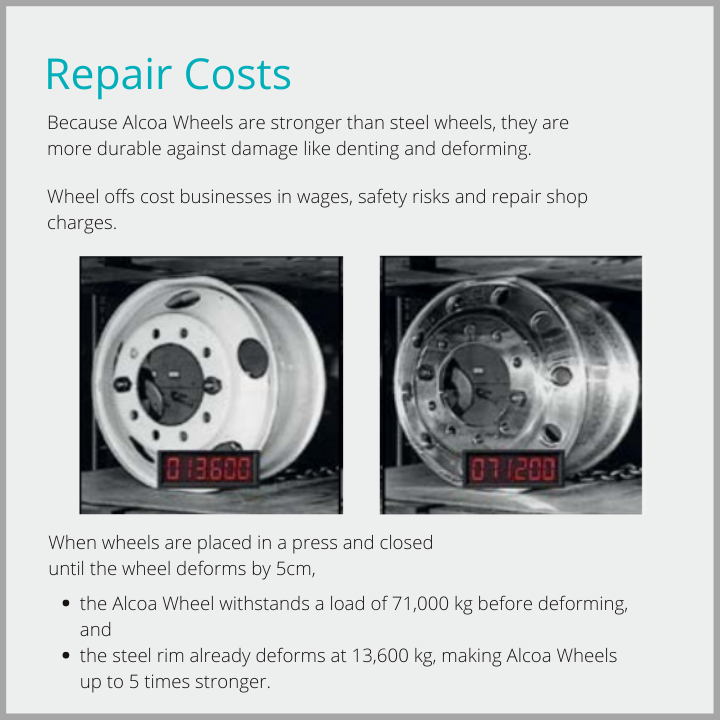
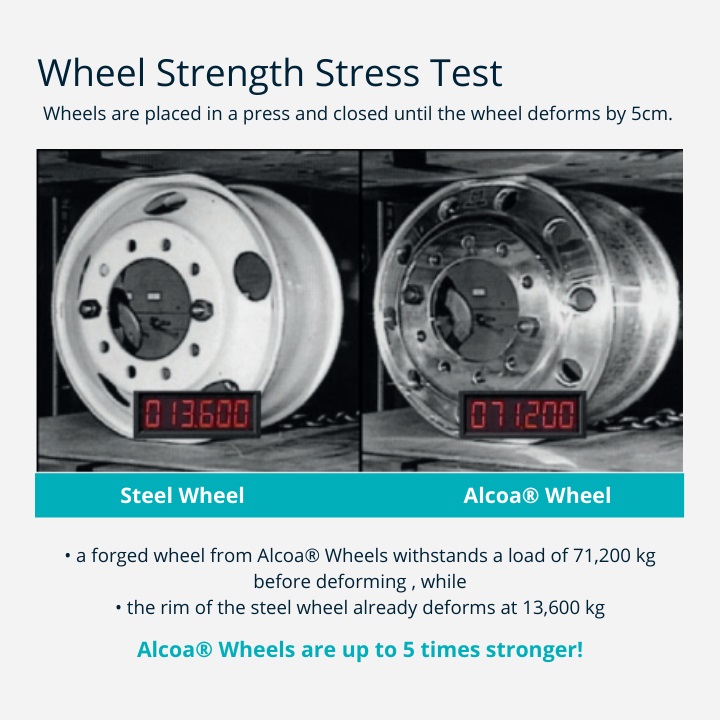
Did you know that a one-piece forged aluminium wheel is up to 5 times stronger than an equivalent steel wheel?

It’s been tested. In internal strength tests, when wheels are placed in a press and closed until the wheel deforms by 5cm, the Alcoa Wheel withstands a load of 71,000 kg before deforming, and the steel rim already deforms at 13,600 kg.

A wheel that is durable enough not to buckle and dent prevents costly wheel-offs and repair charges, not to mention reducing the number employees are exposed to safety risks of frequent wheel changes.

For example: Wheel changes 4 times a year due to damage compared to only once a year means you’ve 3 reduced your associated risk and costs by 3 times.

Thermal image of heat dissipation of an Alcoa Wheel and a steel truck wheel rim side by side
4. Heat Dissipation

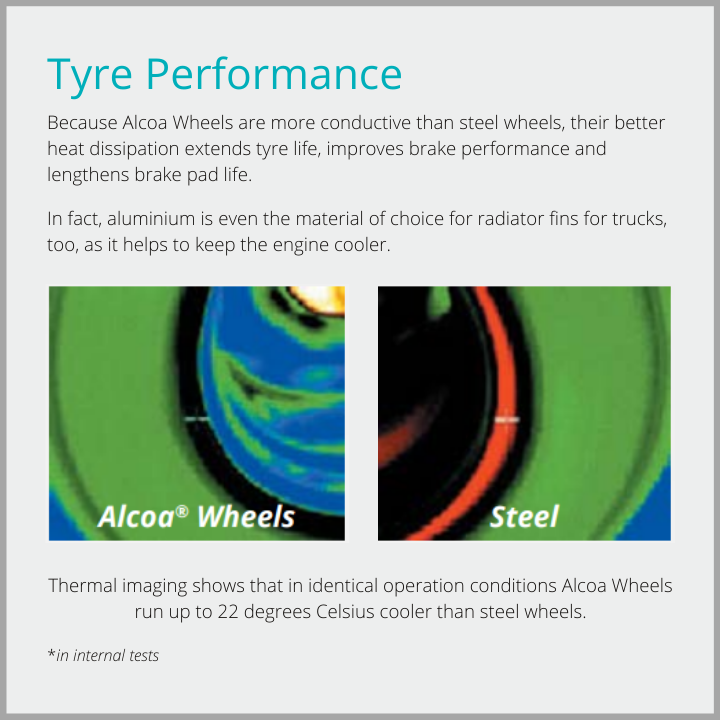
Improved heat dissipation contributes to longer tyre and brake life and it’s a fact that aluminium dissipates heat better than steel – 15 times faster in fact!

As an important aside: in a heat event like a brake related incident, it is important to understand the impact the heat has on the wheel. An overheated wheel must be removed from service immediately. Learn more about the warning signs your wheels have overheated and how the Heat Indicator on your Alcoa Wheels works.

In Queensland, Brisbane City Council has seen the cost benefits of tyre life being extended and lowered break issues after fitting their buses with Alcoa forged aluminium wheels instead of steel wheels.

If we look at an inner city bus that stops-and-goes hundreds of times in a day, often in already high temperatures in the warmer parts of Australia, the benefit of aluminium giving up heat faster is key to taking heat away from the brakes thus keeping tyres from wearing out.

Because steel holds onto the heat, that heat continues to rise even after parking the bus. Aluminium wheels, on the other hand, help to quickly cool down the system and prevent heat damage to the brakes and tyres.

Longer brake and tyre life converts to dollars saved when they are replaced less often.

Listen to Alcoa wheel experts Doug Mason, Mike Yagely and Dave Walters talk about the age old debate that is Aluminium Wheels vs Steel Wheels over on the Behind the Wheels Podcast.

This content requires certain cookies to function. Please accept cookies in order to continue. You may need to refresh your browser window afterwards.

Make Sure It’s An Alcoa® Wheel
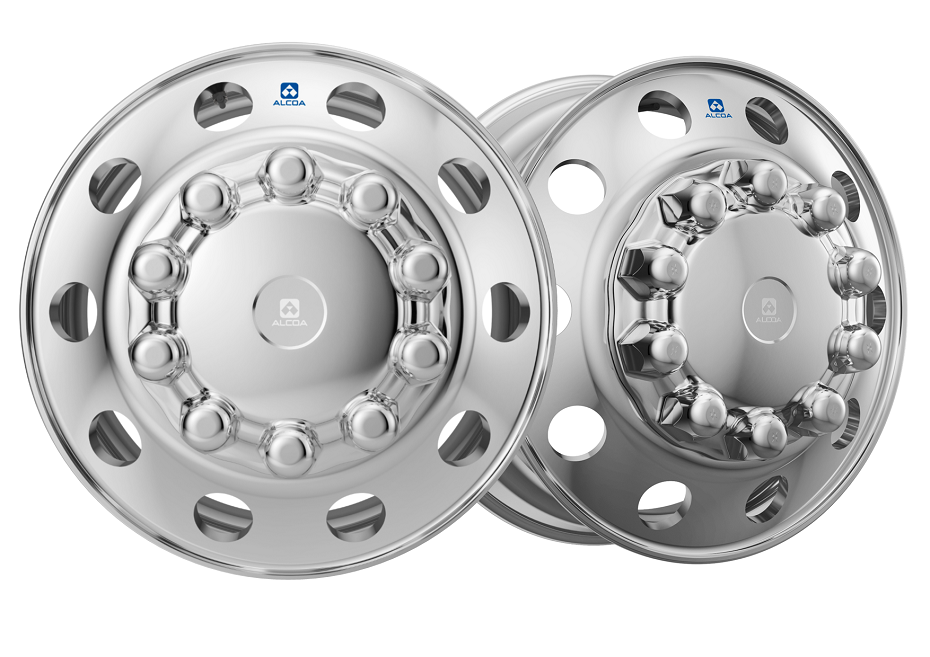
Two Alcoa Ultra ONE Wheels next to each other facing straight and side on

To spec your wheels, ring phone-icon 1800 955 191 to talk with our wheel experts, or fill out a contact form and we will reach out to you to answer your questions and discuss your specifications.

July 28, 2021

How Alcoa® Wheel Technology and Innovation Is Forging the Future of Transport

Alcoa® Wheels didn’t stop at the invention of the forged aluminium wheel in 1948.

We have continued to stay at the leading edge of innovation and are using our wheel technologies to help forge the future of the transportation industry.

New technologies such as electric vehicles, fuel cell vehicles, along with decarbonization initiatives, fuel emissions regulations, green gas house emissions standards, and sustainable city transportation are having an impact on how fleets operate. 

Vehicles are getting heavier due to the technologies required to meet climate change driven standards, when in the transport industry every kilogram counts.

The Future is Electric

 We have seen a range of prototypes, demonstration trucks, and commercially available hydrogen fuel-cell and plug-in electric vehicles come onto the market.

Bollinger and Toyota in North America, Tata in India, and BYD and Chanje in China have introduced prominent new 2019 and 2020 models.

Both Volvo Trucks and Renault Trucks started producing electric trucks in 2019, and Scania released two battery electric city distribution trucks in early 2020.

Scott Morrison sitting in the Volvo FL Electric truck on Alcoa WheelsAlcoa Wheel showing tyre bead heat indicator

Australian Prime Minister, Scott Morrison, took the Volvo FL Electric for a drive on his visit to Volvo Australia Headquarters in 2021.

Big changes are on the horizon for the future of the transport industry, with Daimler Trucks committing in October 2019 to sell only zero-emission vehicles by 2039 and Volvo Trucks announcing in late 2020 its intention for all of its trucks to be fossil fuel free by 2040.

What do Alcoa Wheels have to do with electrification of vehicles?

It’s all about light weighting.

The environmental impact of battery electric vehicles is significantly lower than vehicles with an internal combustion engine, according to a life cycle assessment (LCA) of distribution vehicles published by Scania in 2021.

This means that lighter wheels are becoming a more and more important consideration as we move towards a more sustainable future.

“The push toward electrification in the industry now is driving the light weighting crusade with batteries currently being very heavy,” says Michael Nichols, National Sales Manager of Howmet Wheel Systems, distributor of Alcoa Wheels in Australia.

Fitting lighter wheels not only offsets the added weight of the battery, but they help extend battery life and improve range.

A good example is shown in the bus segment where one OEM notes, “Weight needs to be reduced to get maximum battery capacity and passenger loading while respecting the various regulations (local, state, and federal).

“For every ~150 lbs (~68kg) reduced, one extra passenger can be added.  Alternatively, with Battery energy density of 160 Wh/kg, ~3 miles (~4.8km) of range could be added.”

Close up of Alcoa Dura-Bright Wheel in shadow

“The term ‘innovation’ is thrown around a lot nowadays,” says Nichols. “But when it comes to Alcoa Wheels, our 70+ years of innovation has resulted in real benefits for the customer – lighter weight, stronger wheels with less fuel costs…and now, lower carbon emissions.”

The new Alcoa Ultra ONE® 18kg Wheel is already helping fleets, owner-operators and original equipment manufacturers (OEMs) reduce individual truck and trailer weight by up to 590 kg versus steel options, and up to 100kg for a standard 22 wheel truck and trailer combination, compared with other aluminium wheel options.

The Future Is Aerodynamic

If you thought that aerodynamics was just for airplanes, you would have been right…a few years ago. Nowadays, the transport industry on the ground are seeking to streamline fleets with aerodynamic solutions as the mega trends in sustainability continue to grow.

With the cost of diesel going up, and with increased government activity to reduce greenhouse gases, interest in aerodynamics is becoming a much talked about topic in land transportation.

Aerodynamics reduces air drag which means a lowered fuel consumption and therefore CO2 emissions and is becoming popular for fleets.

For long-haul operators, there’s a definite advantage to streamlining with aerodynamic products, and fleets are doing it through trial and error at the moment, according to Dave Walters, manager of warranty and field service for Alcoa Wheel Products, who acted as chairman for the Technology and Maintenance Council’s (TMC) Recommended Practice (RP) 261, Considerations for Aerodynamic Wheel Covers over in the US.

Doug Mason, Alcoa Wheels Global Technology Manager against a technical drawing background of an Alcoa Wheel

Doug Mason, Alcoa Wheels Global Technology Manager (pictured) shares the following example to highlight the trial and error: “A fleet that adds a trailer skirt might see 5 percent savings.

They might then decide to add another component that should provide an additional 2 percent savings, but only realise 4 percent instead of seeing a total 7 percent in savings.”
Mason explains: “The interaction between the two components did change the airflow, but because of the complexity of the truck and trailer designs themselves, the addition of the second aerodynamic device may have actually created more drag.”

Mike Yagley, global program launch manager for Alcoa Wheel Products says, “The aerodynamics of trucks are just so complex, and the best data out there … belongs to the fleets. They know exactly what they get for the aerodynamics.” 

What do Alcoa Wheels have to do with aerodynamics?

In order to improve aerodynamic performance equipment are added to the vehicle, which all add weight.

Alcoa Wheels, as the lightest and strongest in the market, are considered by fleets and OEMs to help offset the additional weight from the aerodynamic equipment without compromising on the load capacity.

Larger fleets may spec Alcoa Wheels as standard across their equipment, as this provides a stable and consistent measure while trying new technologies to lower emissions and meet standards.

Howmet Aerospace, manufacturer of Alcoa Wheels, is at the forefront of what is working in the field of aerodynamics, and what wheel experts like Mason, Walters and Yagley are seeing is that the benefits of aerodynamic products in the future, especially wheels, will far outweigh the setbacks of the current ‘test and measure’ phase –  such as proper installation of aerodynamic devices, choosing the right ones, or ensuring they don’t damage parts of the vehicle to which they’re mounted.

Alcoa Wheels’ innovative wheel technologies will continue to forge the future of the transport industry as it adjusts to demands to become more and more sustainable.

Make Sure It’s An Alcoa® Wheel
Two Alcoa Ultra ONE Wheels next to each other facing straight and side on

To spec your wheels, ring phone-icon 1800 955 191 to talk with our wheel experts, or fill out a contact form and we will reach out to you to answer your questions and discuss your specifications.

July 7, 2021

6 Quantifiable Reasons Alcoa® Wheels Make Financial Sense

Truck and trailer wheels made from aluminium do cost more money up-front, there’s no denying it. But as it turns out, they are the smarter investment in the long run – especially with the Australian government’s extension of the Instant Asset Write-off tax break.

With the Instant Asset Write-off, businesses can claim an immediate deduction of the cost of an asset in the year the asset is first used or installed ready for use. At the time of writing this, the assets will need to be used for the first time or installed ready for use by June 30, 2023.

“The extension of temporary full expensing to 2023 will continue to drive trucking business investment and help more businesses purchase safer trucks and trailers,” Australian Trucking Association CEO, Andrew McKellar, has said.

What this means for Australian transport business owners who may need to replace equipment, increase equipment numbers and/or improve equipment, is that now could be the time to explore Alcoa® Wheels when buying a new truck or trailer, or upgrading their wheels to Alcoa Dura-Bright® Wheels.

“Trucking businesses have rightly seen the measure as a once in a lifetime opportunity to renew their fleets,” McKellar said.

It’s no secret that forged aluminium truck wheels cost more money than steel wheels, so often this seems like the most economical choice.

A 22.5” by 8.25” steel wheel sells for between $100 and $140. An aluminium wheel, like the Alcoa Ultra ONE® wheel, in the same size can cost two to three times that.

While it might seem economical to go for a cheaper wheel, aluminium wheels work out to be a smart investment for a transport company’s bottom line in the long run.

Here are some of the key benefits of Alcoa® Wheels and 6 reasons why they make more financial sense than generally believed:

1. Fuel Savings

Many people know that investing in the right set of tyres can cut down on rolling resistance and therefore increase fuel savings.

When Alcoa wheels are combined with low rolling resistance tyres, the fuel efficiency is maximised again by some 3% or more! And this is supported by research – a 2012 study of Alcoa forged aluminium wheels in the US.

The study also found that the fuel efficiency savings of Alcoa wheels contributed to a decrease of the carbon footprint of commercial vehicles; so much so that trucks that switched from steel to aluminium reduced carbon emissions by 16.3 metric tons over the lifespan of the wheels, which equals the carbon footprint of an average 4 person household over a year’s time!

According to the North American Council for Freight Efficiency, light weighting technologies save 0.5% to 0.6% of fuel per 450-500kg (1,000 pounds) of weight reduction.

Upgrading to the new Alcoa Ultra ONE® 18kg wheel from the equivalent 22.5” x 8.25” steel wheel, for example, will lighten a standard truck and trailer by over 600kg.

If we calculated that over the 14 year lifetime of a truck and 10 year lifetime of the trailer, there are some substantial fuel savings to be had.

Some businesses, like bulk haulage companies, will want to replace the weight saved with more payload, so one could argue that the above equation isn’t valid, but read on and see what is possible for businesses where payload is a consideration.

If payload isn’t a factor in your business ie you don’t get paid by the load, more load means a decrease in the number of necessary hauls over time, which reduces the amount of fuel consumption as well.

2. Payload Gains

For bulk haulage fleets, the extra payload capacity drives wheel choices.

The newest Ultra ONE® Wheel, at just 18kg, can lighten a rig by over 100kg* against the average aluminium wheel of the same size, which can weigh 23kg.

Compared with a steel wheel of the same size, the weigh difference is upwards of 600kg.

Work out your savings with our payload calculator.

“Weight reduction is an ever-present goal for commercial wheel manufacturers,” says Ross Simmons, Managing Director of Howmet Wheel Systems – distributor for Alcoa Wheels in Australia. “We continue to find new opportunities for weight reduction without sacrificing performance and durability as we innovate with manufacturing processes and metal technology.”

The patented MagnaForce® Alloy used for all new releases of Alcoa Wheels is 17% stronger than the industry standard alloy used to manufacture aluminium wheels, which has allowed Alcoa Wheels to reduce the weight of the wheel while still maintaining the load rate strength.

3. Low to No Maintenance

If we’re still talking ‘cheaper wheels’ being steel, it’s worth noting that although they cost less to purchase up front, steel wheels are high-maintenance ie labour intense – and labour = $$$.

Steel requires a lot of refurbishing such as removing rust, re-painting, and touch-up work, leading to higher lifetime costs.

Maintenance is one of the measurable costs that help transport business owners justify the financial sense aluminium wheels make because refurbishing, curbing damage, tyre and brake life are all part of the choice of wheels at the time of manufacture of the equipment, or replacement of wheels.

By their very nature, wheels in the heavy-duty world, spend their entire lives in harsh environments. They are constantly bombarded with potential corrosion and dirt build up.

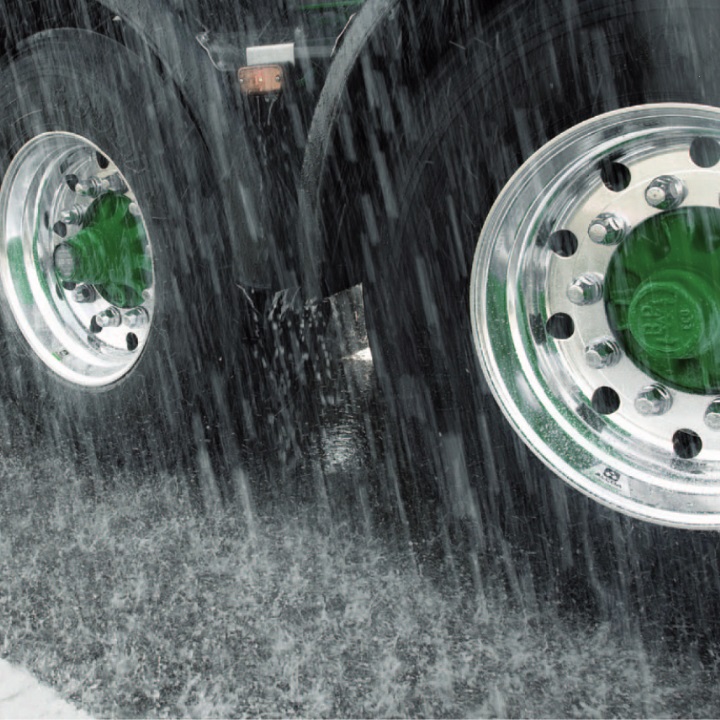
Alcoa Dura-Bright® Wheels, on the other hand, are cleaned with just soap and water.

Two Alcoa Dura-Bright Wheels in the rain.

Dura-Bright® Wheels are a premium surface treatment – not a coating – that actually penetrates the metal to form one composite.

This composite creates a lower surface energy, so less dirt and road grime sticks to the wheel.

It also enables the wheel to keep its shine, and so the wheel stays looking newer for longer without the need to polish, even after hundreds of washes and thousands of kilometres.
The ROI here is easily calculated: labour and time saved cleaning, less wheel offs due to Dura-Bright® wheels being 10 x more resistant to corrosion, and more time on the road hauling loads.

Dura-Bright® Wheels have been known to reduce wheel cleaning time from 25 minutes down to just 2 minutes.

Combining the advantages of lightweight Alcoa Wheels with the easy to clean benefits of the Dura-Bright® finish helps to lower lifetime operating costs and provide value to fleet owners.

4. Extended Tyre and Brake Life

Improved heat dissipation can lead to longer tyre and brake life, so whether trucks and equipment are exposed to high temperatures due to harsh weather conditions, or they are start and stopping in high density city areas, the advantage of aluminium wheels is that they give up heat faster and dissipate heat away from the tyres and brakes – thus helping to improve tyre and brake life.

If the truck and trailer were on steel wheels, the heat would continue to rise even after parking the trucks. Alcoa Wheels help to quickly cool down the system and help to prevent heat damage to the tyres and brakes.

Because Alcoa Wheels are made from a one-piece aluminium machined on a CNC lathe, they are better balanced, which makes for improved ride quality and improve tyre life.

The cost of replacing tyres due to overheating can be lessened or even avoided, with that money staying in the business instead of being put into ongoing maintenance costs.

5. Driver / Operator Retention

Because Alcoa Wheels are 100 percent CNC machined, run-out and vibrations are eliminated leading to a smoother, safer ride for the operator.

This can potentially be measured as ROI in longer driver retention.

Employee satisfaction is directly proportional to how long a person remains in a role, and it has been recorded in a 2016 survey of 6200 truck drivers at two large fleets that those who believed their safety was prioritised by their employer felt more valued and were more likely to stay in their jobs.

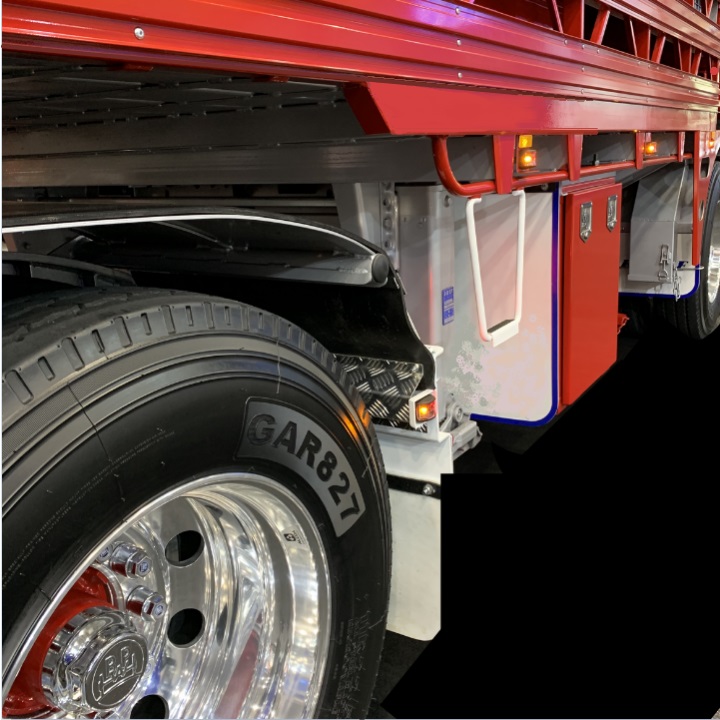
Closeup of Alcoa Wheels on a red cattle trailer
6. Resale and End-of-Life

The durability and long life of Alcoa Wheels add value to commercial trucks and trailers, even when it is time to sell them. Research shows that trucks equipped with aluminium wheels have a higher trade-in value.

Wheel manufacturers report that the resale value of aluminium wheels is typically more than 50% of the original investment as much as 10 years earlier.

Even at the end of their very long life, Alcoa Wheels have value because they are recyclable. They will never be taken to a landfill.

Upfront Costs Remain Upfront

Price remains an issue for many businesses, which is why the Instant Asset Write-Off has been a godsend to many owner-operators, fleet owners and OEMs who have wanted to upgrade to aluminium wheels.

“We find that working out an ROI based on productivity gains helps in the decision to spec Alcoa Wheels,” says Michael Nichols, National Sales Manager for Howmet Wheels Systems Australia. “For example, we can quantify things like the reduction in maintenance costs, increased resale value due to the longevity of our wheels, and even driver retention.”

He adds: “The aluminium wheel choice is a long game, so to be able to take advantage of the government’s extension of the Instant Asset Write-Off now is making a lot of sense to business owners out there who can get behind the financial sense Alcoa Wheels makes over the lifetime of their equipment.”

The Preferred Choice of Leaders in the Industry

In the mining and heavy haulage sectors in particular, where every piece of the vehicle uses as much aluminium as possible because the payback is so great, Alcoa® Wheels are the preferred choice for leading OEMs in Australia.

How Does The Instant Asset Write-Off Work If I Want To Buy A New Trailer?

In a nutshell, if you buy your new trailer between now and 30th June essentially you will get an immediate tax deduction.

  • Threshold amount is $150,000 (up from $30,000)
  • Eligibility has been expanded to businesses with an aggregated turnover of less than $500 million (up from $50 million).

Businesses can claim an immediate deduction (business portion only) for multiple assets, new or second-hand, provided each asset costs less than $150,000.

Our best suggestion is to get onto your tax accountant STAT so that he or she can give you professional advice on what your options are.

You can also visit the ATO website to read up on what you can and cannot do.

Make Sure It’s An Alcoa® Wheel
Two Alcoa Ultra ONE Wheels next to each other facing straight and side on

Did you know that you can specify Alcoa® Wheels when buying a truck or trailer?

Ask for Alcoa® Wheels to be included in the quote. To spec your wheels, ring phone-icon 1800 955 191 to talk with our wheel experts, or fill out a contact form and we will reach out to you to answer your questions and discuss your specifications.

*A standard truck and trailer with 22 wheels.

June 22, 2021

6 Ways Alcoa® Wheels Contribute to Our Planet’s Sustainability

Switching one truck from steel wheels to forged aluminium wheels equals the carbon footprint of an average  4 person household.

The carbon footprint of the transport sector is one of the most common ways to measure the effect of the industry on the environment. An increase in greenhouse gas emissions, and therefore in carbon footprint, is believed to be the primary event associated with climate change that has led to global warming.

The trucking industry has been doing its part for the environment to lower emissions and improve the fuel efficiency of trucks on the road in recent years, and aluminium wheels are integral to the success of this undertaking.

Although the transport and agricultural sectors both contribute around a sixth of Australia’s net Green House Gas (GHG) emissions, worldwide the percentage of road transport CO2 emissions contributed by heavy duty vehicles is expected to reach 41% globally by 2030. 

And despite Covid sending Australia’s carbon emissions plummeting in 2020 to the lowest levels in 30 years, it wasn’t long before they started to climb again with the easing back of lockdown restrictions.

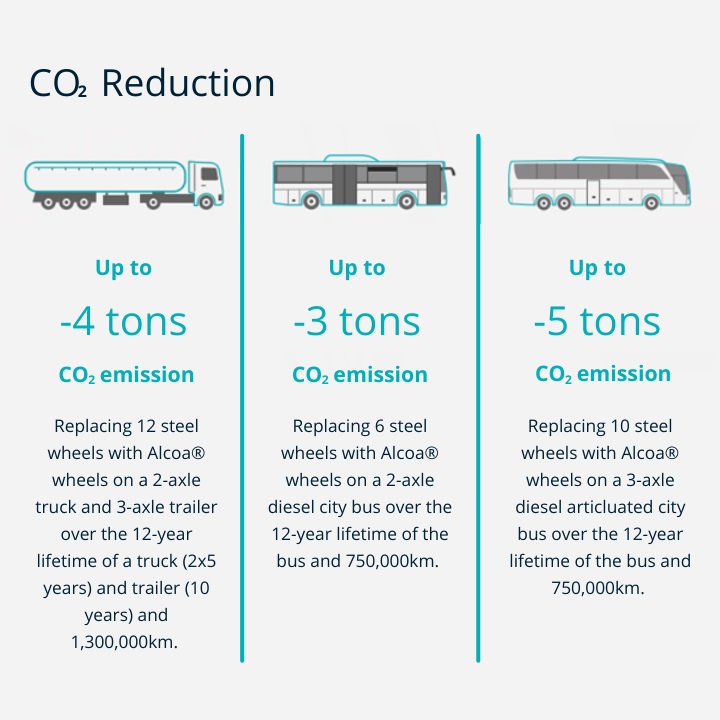
c02-reduction

In 2012, Howmet Aerospace, manufacturer of Alcoa® Wheels, released the findings of a peer-reviewed life cycle assessment* (LCA) which concluded that Alcoa® forged aluminium wheels substantially cut the carbon footprint of commercial vehicles.

In North America, the study found that substituting 18 conventional steel truck wheels with Alcoa® aluminium wheels cut carbon emissions by 16.3 metric tons over the lifetime of the wheels.
In Europe, 13.3 metric tons of carbon emissions were cut by replacing 12 steel wheels with aluminium ones. It was concluded that the use of Alcoa® forged aluminium wheels over steel wheels could be viewed as an active and highly efficient investment into the reduction of greenhouse gas emissions in the commercial vehicle sector. 

Here are 6 ways aluminium wheels are helping lead the sustainability effort in the transport sector and helping the planet: 

1. LIGHTWEIGHT: AN ALCOA WHEEL IS UP TO 51% LIGHTER THAN A STEEL WHEEL

Today, in 2021, the pressure is on even more with stricter regulations around reducing carbon emissions, and with new technologies adding weight to commercial vehicles, there is a call for lighter, stronger wheels to offset these costs while at the same time keeping payloads lucrative and maximising fuel efficiency.

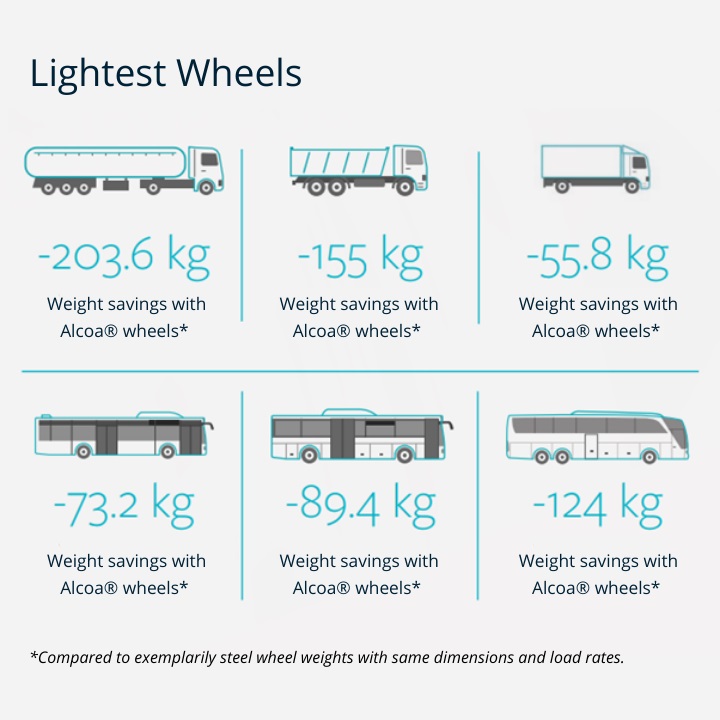
Chart showing kilos saved switching to Alcoa Wheels from steel wheels

By switching from steel to aluminium Alcoa® Wheels, OEMs and fleets can easily save up to 51% in weight, depending on the wheel size, allowing them to:

  • increase the vehicle’s payload
  • reduce operating costs
  • boost your profitability,all while doing their bit for the planet!

Adding over 200kg of additional payload per average haul with lighter wheels, plus reducing the fuel consumed per kg of cargo, increases the efficiency of the transport.

Given the lightweight properties of aluminium wheels, even the amount of energy required to transport the wheels to OEMs is significantly lower than steel, as illustrated here.

 “Alcoa® Wheels support sustainable transportation by helping trucks and trailers to be greener,” says Ross Simmons, Managing Director of Howmet Wheel Systems Australia (distributor of Alcoa® Wheels). “Helping operators cut down on fuel use and carbon emissions is one of our biggest priorities, and we invest heavily in leading in the latest innovations to engineer lighter and lighter wheels”.

2. DURABILITY: HEAVY DUTY WITHOUT THE HEAVY

Aluminium wheels are tough enough to withstand both the rigors of the most challenging climatic conditions – from cold to wet to hot.

Alcoa® Wheels are forged from one solid block of aluminium. With an 8,000 tons press, the block is forged into a wheel shape. Once forged, the wheels are heat-treated to maximize overall mechanical strengths.

The Alcoa® Wheels forging process aligns the grain flow of aluminium with the shape of the wheel, even in the critical area where disc and rim meet. This process results in wheels with unrivalled forged strength that withstand the most severe tests to ensure highest standards and quality.

Howmet Wheel Systems, distributor of Alcoa® Wheels in Australia, are so confident in the durability and quality of Alcoa® wheels, they give a 5-year unlimited mileage warranty.

Fitting durable, long lasting wheels to your equipment, minimises the need to replace wheels and reduces your impact on the environment.

3. RESISTANCE FROM CORROSION: AN ALCOA DURA-BRIGHT® WHEEL IS 10 X MORE RESISTANT

What makes aluminium wheels so resistant to corrosion is that the metal spontaneously forms a thin but effective oxide layer that prevents further oxidation. Aluminium oxide is impermeable and, unlike the oxide layers on many other metals, it adheres strongly to the parent metal. 

Alcoa® Wheels’ low maintenance surface treatment, Dura-Bright®, has been engineered to bond with the aluminium even more by penetrating the metal to form one composite 3 times more resistant to chemicals and 10 time more resistant to corrosion than ‘standalone’ aluminium.

Using less harsh chemicals to clean your wheels reduces your impact on the environment.

4. STRENGTH: THE STRONGEST WHEELS ON EARTH

Aluminium alloys are what makes aluminium one of the toughest metals on earth. Alcoa® Wheels are manufactured using a patented MagnaForce® Alloy which has strengthened the wheels by 17% over the industry standard 6061 alloy used for aluminium wheels worldwide.

Alcoa Wheel alongside a steel wheel in a strength stress test

The stronger the wheel, the more load it can bear. The Alcoa® Ultra ONE® Wheel, for example, weighs just 18kg and can carry the same load (3555kg) as its predecessor over ½ a kg heavier.

Increasing payload helps you reduce the number of trips it takes, therefore saving you in fuel and other consumables and thus saving the environment.

5. 100% RECYCLABLE

Aluminium can be recycled forever.

Recycling an Alcoa® Wheel at the end of its useful life will generate a piece of metal with exactly the same properties as the metal used to manufacture the recycled wheel. Once the new product reaches the end of its useful life, the same process can be performed again and again.

In the recycling process, almost all of the quantity of the material is preserved – and this process can be repeated almost infinitely.

Aluminium recycling also saves huge economic and environmental costs compared with the creation of virgin metal. Each ton of aluminium recycled saves one square meter of land use and 24 barrels of crude oil equivalent of energy.

It saves more than 15 tons of fresh or sea water use, eliminates more than 9 tons of CO2 equivalent of greenhouse gas emissions, and avoids 2.5 tons of solid waste and hundreds of kilograms of other air and water-borne emissions and effluents.

6. LONG LIFE: AN ALCOA® WHEEL LASTS FOR DECADES

Aluminium is especially durable in end-use and it lasts for decades. During its life as an Alcoa® Wheel, it has no energy or resource demands, nor does it release any particular environmental hazard.

In the case of commercial vehicles such as buses, medium and heavy trucks and truck trailers, the lifetime energy savings range from 150 to 1,048 MJ, or 1.0 – 7.2 gallons of crude oil equivalent, and lifetime greenhouse gas emission avoidance ranges from 10 to 76 kg CO2 equivalent. These findings have been largely supported by the results of other similar independent studies across the world. 

The aluminium industry’s view of the sustainability of its material is that each piece of the metal ever made should be used, recycled, and reused for multiple generations and none should be landfilled or permanently destroyed.

The implications of this vision for the permanent existence of aluminium wheels are tremendous for our planet.

Make Sure It’s An Alcoa® Wheel
Two Alcoa Ultra ONE Wheels next to each other facing straight and side on

To spec your wheels, ring phone-icon 1800 955 191 to talk with our wheel experts, or fill out a contact form and we will reach out to you to answer your questions and discuss your specifications.

*Life cycle assessment (LCA) is the universally accepted method to comprehensively assess the environmental impact of a product. The findings of the Alcoa® Wheels LCA were based on the full life cycle of the wheels—from the raw materials, through the production, distribution, use, disposal, and recycling of the wheels. 

June 5, 2021

8 Weighty Answers to Questions About The World’s Lightest Wheel

The prominent ‘lightest wheel in the market’ statement by Alcoa® Wheels has drawn in a lot of curiosity – and some great questions – from customers and other interested parties.

A statement like this isn’t said lightly, if you’ll pardon the pun. Alcoa Wheels were the very first forged aluminium wheel in the world, when in 1948 Aluminium company, Alcoa, using an alloy it had developed for the aerospace industry, invented the forged aluminium wheel.

In 1968, the Alcoa company set the industry standard again when it launched its 6061 alloy for forged aluminum wheels. Alcoa’s 6061 material provided a strong, durable alloy, resistant to corrosion that is used to this day by all major forged aluminum wheel manufacturers as the industry standard alloy.

Alcoa® Wheels have continually met increasing demands for lighter weight wheels, and by 2013 their design experts were engineering products 4.5kg lighter than wheels from 20 years before, using the same alloy.

Today, weighing in at just 18kg, the new Ultra ONE® Wheel is heralded as the lightest and strongest forged aluminium wheel in the world of commercial vehicles; manufactured from an exclusively patented alloy (6361) which is 17% stronger than the industry standard.

Here are the answers to 8 questions about the Ultra ONE® Wheel:

QUESTION 1: What does spec’ing the lightest wheel mean for my business?

A: In order to meet carbon emission regulations at truck OEM’s, fleets are switching to lighter-weight wheels more and more to offset the weight of technologies needed to remove air pollutants from diesel engine exhausts.

Lighter-weight, lower-maintenance wheels also help trucks improve fuel economy to help make up for rising fuel prices and move goods in a cleaner, more fuel-efficient way.

With the Australian Government extending the Instant Asset Write-off incentive recently, truck and trailer OEMs, together with owner-operators are taking advantage of being able to spec premium wheels like Alcoa® Wheels, and even up-spec to a Dura-Bright® finish, because they are able to make the best wheel investment decision comfortably and do it right, first time.

QUESTION 2: How do the numbers stack up when cost is a serious consideration for me?

A: The average forged aluminium 22.5” x 8.25” wheel weighs 23 kg, which is 25% heavier than the new Ultra ONE® Wheel. Put that into a payload calculator and you’ve got some serious savings over the lifetime of your equipment.

QUESTION 3: What applications are the new Ultra ONE® Wheels good for?

A: Because of the strength and durability of Alcoa® Wheels, they perform well in the harshest of conditions and are chosen by leaders in the mining operating industry, as well as for long haul applications, where payload and fuel efficiency are important considerations in the trailer build process.

The new Ultra ONE® Wheel is currently available in standard US fitment on 10-285, so you’ll see it on Tippers, Tankers, Skels and Tautliners – in fact, any trailer seeking to be light weight will benefit from this durable, light wheel that’s trusted by some of the biggest OEM’s in the world. Learn more about which applications Alcoa® Wheels suit.

The Dura-Bright® finish is widely used on the Ultra ONE® Wheel where maintenance down time is a cost factor to operators.

Alcoa Wheels Ultra ONE Wheel Hub Bore Groove Techonology comparison chart
QUESTION 4: How does the new wheel compare to the previous version of the Alcoa® Ultra ONE® Wheel?

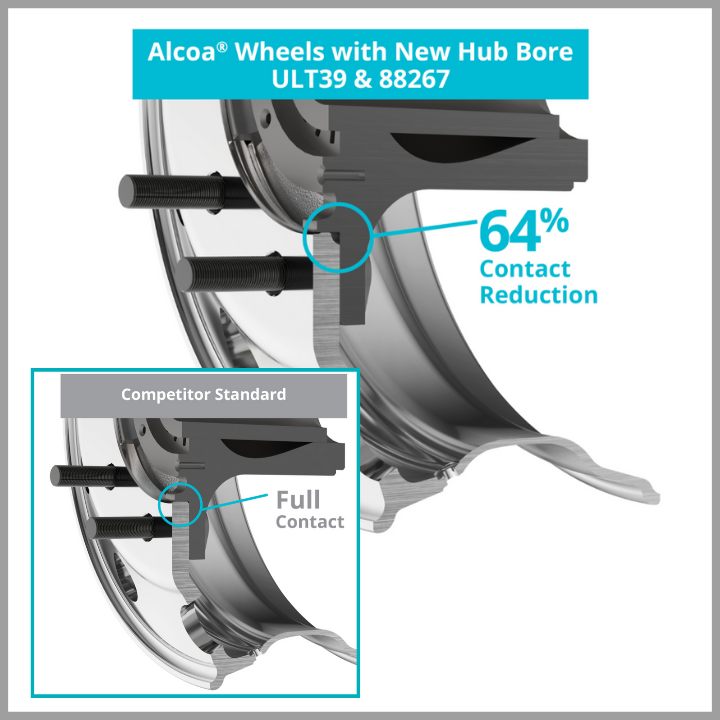
A: The new 18kg wheel is an improvement in important ways. Its new Hub Bore Groove Technology reduces the metal-to metal contact area between the wheel and the hub wheel end by half.  This reduces the opportunity for corrosion to form, thus allowing for easier wheel removal during maintenance.

Aside from the Hub Bore Groove Technology, the exclusive to Alcoa® Wheels patented MagnaForce® Alloy is 17% stronger than the industry standard for forged aluminium wheels, which means that while the new Ultra ONE® wheel is 600grams lighter than the previous version, the load rating is the same at 3,355kg and payloads are thus improved further.

QUESTION 5: Does the new wheel look different to the previous Ultra ONE® wheel?

A: The wheel face, hand holes, and rim profile all look the same as the previous version, with minor changes not easily visible.  The only visible change you will note is the new enhanced hub bore with less metal present to reduce contact with the wheel hub.  Once mounted this hub groove will be hardly noticeable.

QUESTION 6: How will I know if I have the new Ultra ONE® wheel or the previous one?

A: The difference is in the part number. On the wheel roll stamp, you’ll see ULT39 in the part number, indicating the new 18kg wheel. The previous wheel part number began with ULTRA.

Closeup of Alcoa Wheels with Mirror Polish and LvL One finish
QUESTION 7: What finishes are offered with the Ultra ONE® Wheel?

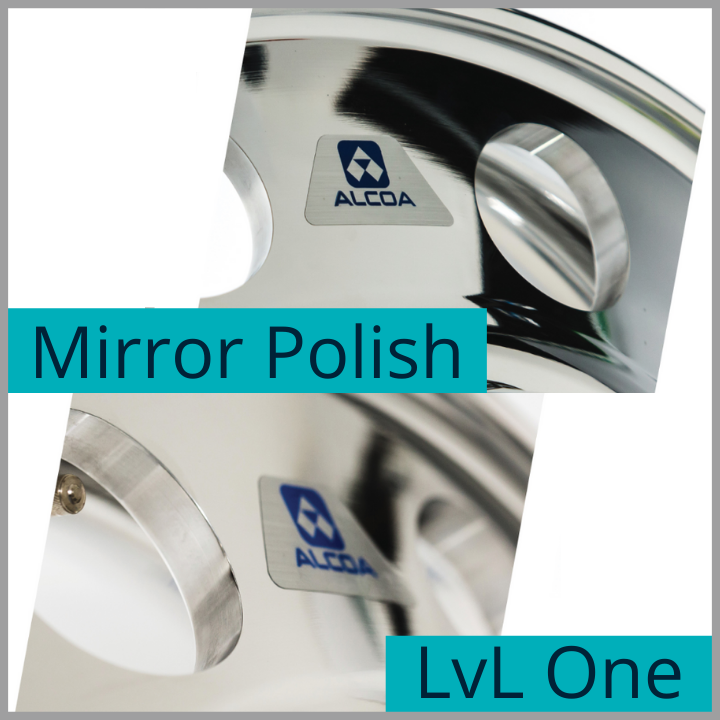
A: This new wheel is offered in the same leading finish options: LvL ONE®, Mirror Polish and Dura-Bright®.

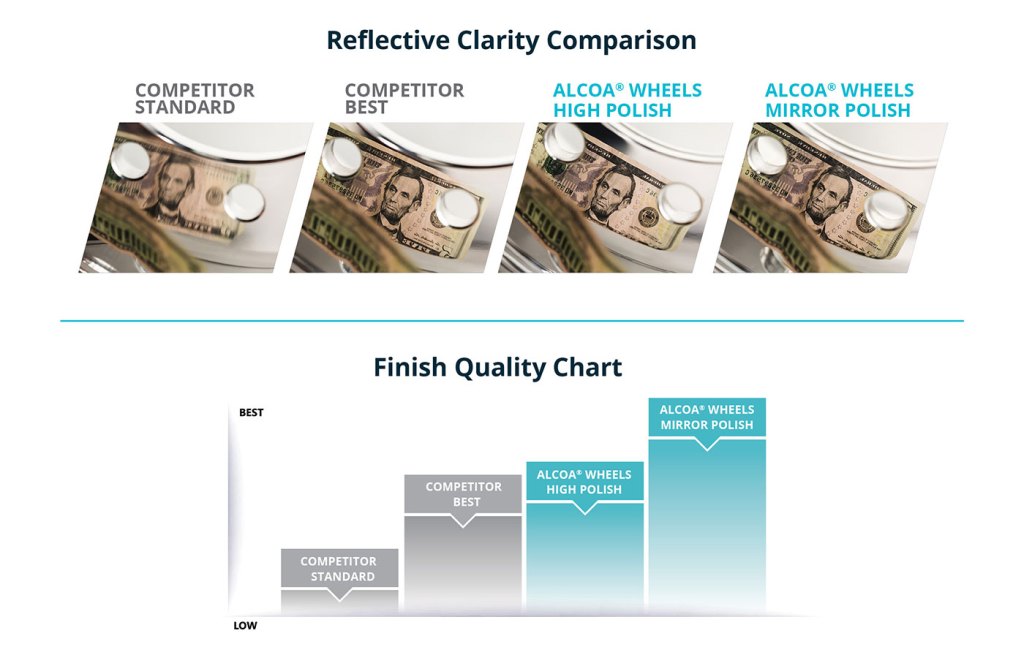
  • LvL ONE® reflective finish and high gloss levels give the wheel an appearance 6 times brighter than that of competitor wheels.
  • Mirror Polish  is in the premium wheel finish exclusive to Alcoa® Wheels, with the highest level of gloss and reflectivity of any wheel on the market.
  • Dura-Bright® surface treatment offers a consistent shine without the need to polish.

Compare the various Alcoa® Wheels finishes here.

The quality of Alcoa® Wheels finishes is evident in the ‘Reflective Clarity Comparison’ below, with the competitor best finish sitting far below the Alcoa® Wheels’ standard LvL One® finish.

Alcoa Wheels finish comparison chart with varying degrees of shine
QUESTION 8: Where can I inspect the Ultra ONE® wheel?

A: Call phone-icon 1800 955 191 and talk to our wheel specialists. They will help you decide if the new Ultra ONE® Wheel is right for your equipment…and we’ll arrange to come out to you.

Make Sure It’s An Alcoa® Wheel
Two Alcoa Ultra ONE Wheels next to each other facing straight and side on

Did you know that you can specify Alcoa® Wheels when buying a truck or trailer?

Ask for Alcoa® Wheels to be included in the quote. To spec your wheels, ring phone-icon 1800 955 191 to talk with our wheel experts, or fill out a contact form and we will reach out to you to answer your questions and discuss your specifications.

May 28, 2021

6 Ways To Avoid Voiding Your Alcoa® Wheels Warranty

WARNING: Welding, brazing, or otherwise heating any area of an Alcoa® aluminium wheel will weaken the wheel. Weakened or damaged wheels can lead to an explosive separation of tires and wheels or wheel failure on the vehicle. Explosive separations of tyres and wheels or wheel failure on the vehicle could cause serious injuries or death. Never attempt to weld, braze, or heat any surface of an Alcoa® aluminium wheel.

Did you know that even something as seemingly harmless as chroming your Alcoa® Wheels instantly voids the 5 year warranty?

Alterations to a wheel may change stress points, strength, and corrosion properties in such a way that the wheel no longer meets design criteria, resulting in non-compliance with safety standards and vehicle certification requirements.

All Alcoa® Wheels come with a 5 year Warranty and are designed, manufactured, and rigorously evaluated in a tightly controlled environment to ensure they pass performance criteria only for approved applications, so it’s important to only use them for the applications they’re designed for and not to alter them in any way.

Engineer with an Alcoa Wheel checking quality and performance criteria
Quality Control Dimensional Testing being carried out on an Alcoa® Wheel
THE 6 THINGS THAT WILL VOID YOUR WARRANTY

Howmet Wheels Systems Australia (distributor of Alcoa® Wheels) will not be able to consider a wheel valid for reparation under the warranty if a customer brings a wheel in with any of the below alterations:

  1. Machining (of any type)
  2. Redesigning the hand holes
  3. Reconfiguring the bolt holes in any way
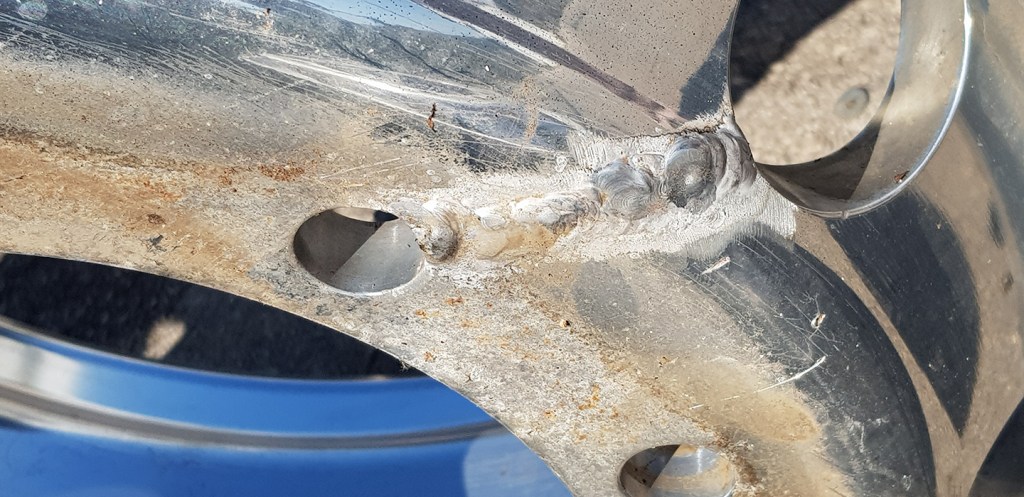
  4. Welding on any part of the wheel
  5. Painting the wheel
  6. Chrome plating the wheel

In fact, the warranty conditions state, “Howmet is not liable for, does not warrant, and will not repair or replace or make adjustment, with respect to any Wheel or surface or rim flange treatment on such Wheel that has been subjected to misuse, abuse, or improper modification.”

Under Australian law, while Alcoa Wheels owners are offered extra protection from guarantees that fall under the Australian Consumer Law, these consumer guarantees do not apply if the customer has misused a product in any way that caused the problem they are seeking to be remedied.

THE TROUBLE ALTERATIONS CAUSE WITH WARRANTY

Where wheels have been altered, Howmet Wheel Systems may not be able to certify the accuracy or validity of the certification markings that are stamped on the wheel at the time of manufacture.

Alterations can also lead to cracks, bending, shrinkage, breakage, out of roundness, balancing issues, and other problems that can lead to catastrophic wheel failure, wheel separation, tyre failure and/or tyre separation, all which can cause  serious injury or death.

Alcoa Wheel altered with welding and voiding the 5 year warranty

Wheel showing welding alteration on the mounting surface and thereby voiding the 5 year warranty.

WARRANTY BEST PRACTICE

Always refer to the Alcoa® Wheel Service Manual when maintaining your Alcoa Wheels. Section 3-2 in our wheel service manual addresses wheel alteration in more detail.

Listen to wheels experts sharing warranty stories over at the Behind the Wheels Podcast:

This content requires certain cookies to function. Please accept cookies in order to continue. You may need to refresh your browser window afterwards.

Make Sure It’s An Alcoa® Wheel When You Buy Your Next Truck or Trailer
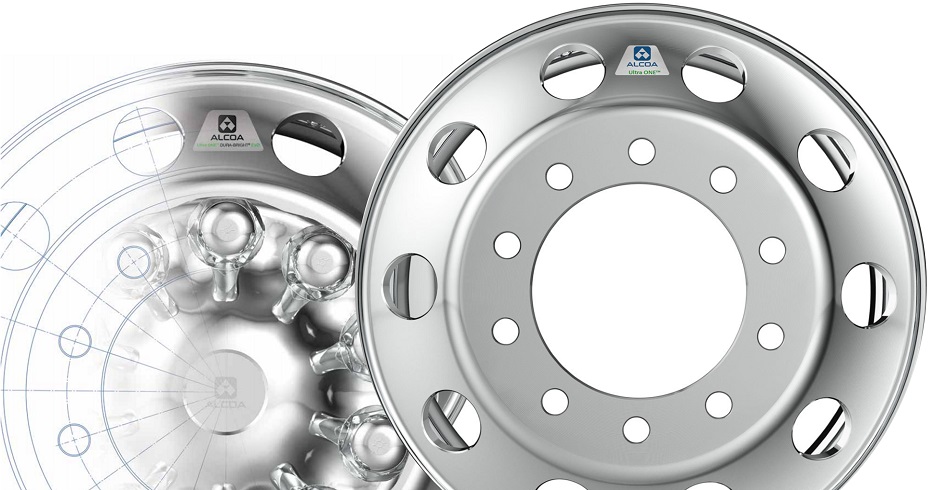
Two Alcoa Ultra ONE Wheels next to each other facing straight and side on

To spec your wheels for your equipment, ring phone-icon 1800 955 191 to talk with our wheel experts, or fill out a contact form and we will reach out to you to answer your questions and discuss your specifications.

May 3, 2021

5 Things You Wouldn’t Expect About Designing the Lightest and Strongest Aluminium Wheels

You’re not alone if you’re asking, ‘Why is wheel design so complex when all wheels are simply round?’

Even people who work in the wheel industry in many forms – from tyre fitters to service technicians – are told that working with wheels ‘should’ be easy because, after all, a wheel is a wheel is a wheel.

Designing the lightest and strongest wheels is top of the list for the manufacturer of Alcoa Wheels, Howmet Aerospace, as these factors determine the overall performance of a truck, bus or trailer when it comes to increasing payload capacity and bettering fuel efficiency to help fleets maintain a healthy bottom line.

Two Alcoa® Ultra ONE® Wheels with and without hub cover

Grant DeGeorge, Global Design Manager, has been with the company for almost 14 years now (as at 2021) and designed wheels for approximately 10 of those.

“It’s not a cookie cutter design,” he says. “When somebody wants a 22.5”x8.25” wheel, we just don’t pull a design from our back pocket and run it through a test. There’s a lot of things we’ve got to get from the customer, whether it be a mounting system, the offset, whether it’s going to be used in the steer position, for example”.

Grant also says that in between what the customer needs, things like the load rating, the pressure ratings, what application they’re using it in, whether they’re using disc brakes, whether they’re using drum brakes, all need to be taken into account when designing wheels that are reputed to be the lightest and strongest in the market.

“It’s the whole system solution that we need to think about when we’re designing a wheel,” he adds.

Here are 5 unexpected things about designing the lightest and strongest wheels in the market:

1. LOAD ISN’T JUST KGs

When we think of a light commercial ute that weighs around 750 to 1000kg, the wheels each weigh 13 or 14kg (they can also weigh up to just over 18kg).

Truck wheels, on the other hand, can carry loads of 3500kgs or more…and they are able to do that now on wheels weighing just 18kg, like the new Alcoa® Ultra ONE® 22.5” x 8.25” wheel released in February 2021.

That’s quite an engineering achievement, considering that light commercial ute carrying less than a third of that weight on wheels that weigh almost the same!

And load is more than just the weight of the consignment sitting on the trailer.

“We take into account the tyre, it’s the mounting system, it’s everything that goes into how the load is transferred into that wheel,” says Grant.

“We know what the most severe application may be, so we incorporate that into our FEA* (Finite Element Analysis) to make sure that we are designing that wheel to handle those highest loads,” he adds.

2. THERE’S MORE TO ROTATION THAN ‘THE WHEELS ON THE BUS GO ROUND AND ROUND’

As wheels rotate, the load weight is transferred through the tyre and into the wheel at different places and at different times, adding stress that needs to be carried by the wheel.

“When designing a wheel, you’ve got to make sure you’re taking into account that full rotation cycle because the stresses aren’t being transferred in just one spot and so the load rating changes,” explains Grant.

In other words, the wheel designer has to make sure that the wheel can handle that change in load as it’s going through every second of its rotation.

This is called ‘cyclic loading’ and it is important that a wheel is sufficiently robust to withstand force and variable loads when doing its job on the truck or trailer.

3. DIFFERENT PARTS OF THE WHEEL REACT DIFFERENTLY TO STRESS, TOO

There are a lot of other parts of the wheel designers need to look at when it comes to making a wheel that can withstand the stress of the load, like: the rim, the hand holes, and any interrupted surface within the wheel’s design.

Each of these areas react to load stress differently, so the forged wheel can’t simply be treated as the one piece of aluminium it is.

The engineering team takes into consideration additional load-inducing variables like over-inflation, under-inflation, tyre scrubbing, and steer axle turning stresses. All of these change the way the wheel is loaded. For example, they may move the stresses from the handhole to the bolt holes.

4. TYRES MATTER

Another important factor in designing wheels is to cross reference the wheel’s components with the tyres that are currently available in the market.

As new tyres are released into the market by the major tyre companies like Michelin, Bridgestone and Goodyear, Alcoa® wheel designers stay abreast of this and factor things like new load ratings in so that the wheel matches the new specs and applications.

Industry standardisation impacts the design of the wheel. International tyre standards for mounting systems, for example, need to be followed so that the rim is designed to fit the tyres available in the market.

“The last thing we want to do is design a wheel that the moment you try to put a tyre on it, it doesn’t work or you mess up the tyre,” says Grant. “We follow the min-max dimensions of tyres to help us design a rim that’s compatible.”

5. TESTING, TESTING AND THEN MORE TESTING OUT IN THE FIELD
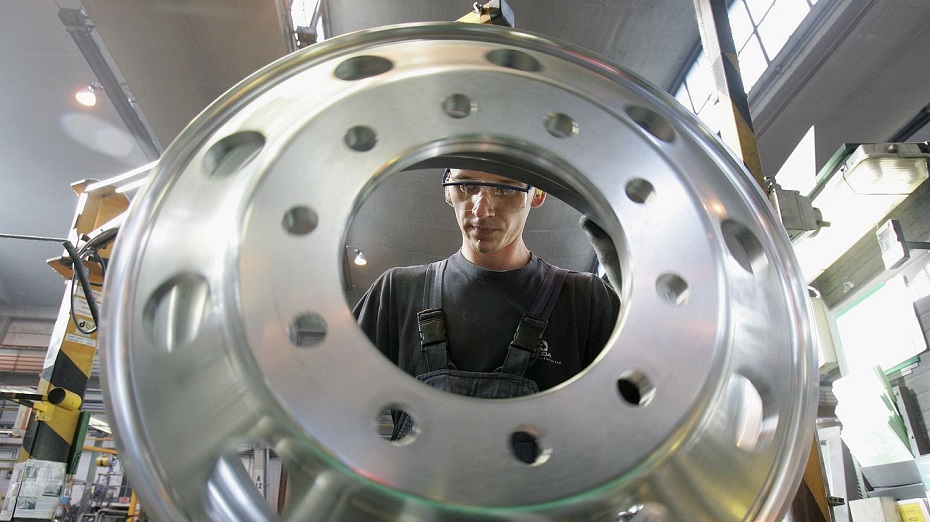
A man standing behind an Alcoa® wheel testing it
[Image credit: Denaparts]

All Alcoa wheels are put through stringent, rigorous testing before being released to market.

Biaxial wheel/hub fatigue test technology is one of the tests that are run. Also known as the LBF test, it takes into account actual driving conditions, like rotating, bending and operational loading conditions, when testing for wheel life durability.

Another test we run is called the RR Moore Test, where we test cyclic fatigue until the endurance limit is reached. A number of variables are thrown into the mix to increase and decrease stress factors on the wheels and to cover all bases.

All Alcoa Wheels exceed the 1 million cycle requirement outlined in globally recognised radial and cornering fatigue testing standards**.

While it’s all very well simulating conditions in the lab, out in the real world things are a little different, so good wheel design includes taking the wheels out for a spin on the road.

Grant says, “We make sure we find out how people are using our wheels, too, because the damage we’re putting on a wheel in the field may not be the damage we’re considering or testing for initially. Feedback from customers is an essential because that gives us an idea of what targets we need to design for.”

Damage cycles out in the field could be more lateral loads, more cornering loads, or where the wheel is positioned on the vehicle.

“If you’re getting to vocational applications such as mining or construction where they’re really going to the extremes for that wheel, you’ve got to make sure that you’re designing for those specific applications,” he adds.

Who would have thought wheel design would be such a complex undertaking?

Designing to the needs and applications of the customer is very much embedded in the Alcoa Wheels philosophy, and the results speak for themselves.

The Alcoa® Ultra ONE® 22.5” x 8.25” wheel is leading the drive to enhance the durability, sustainability and reliability of heavy-duty equipment wheels at just 18kg and with 17% more strength than industry standard 6061aluminium alloy wheels.

Make Sure It’s An Alcoa® Wheel
Two Alcoa Ultra ONE Wheels next to each other facing straight and side on

To spec your wheels, ring phone-icon 1800 955 191 to talk with our wheel experts, or fill out a contact form and one of our wheel specialists will help you out.


*FEA is a numerical method used for solving engineering problems that involve complicated geometries, various loading conditions and material properties.
** Reference SAE J267 testing using a 2.0 severity factor.

April 15, 2021

Is Torqueing Just All Talk or All Important?

The importance of proper wheel torque sequence is often underestimated when it is in fact critical for installation and to ensure safety on the road.

“Using the correct tools, procedures and patterns prevents cracking of the wheel and damage to fastener threads or stretching of the studs, which all affect the overall performance of the wheel,” advises Michael Nichols, National Sales manager for Alcoa Wheels Australia.

“Brake drums, rotors and hubs can also become warped if the torqueing procedure isn’t followed correctly,” he adds.

Do It Once; Do It Right

Below is an Alcoa Wheels expert-driven, step-by step set of instructions and key information to consider when installing your wheels:

HOW-TO: PRE-TORQUE PREPARATION
  1. Clean all mating surfaces:
    • Clean the hub or drum.
    • Clean the wheels.
  2. Alignment sleeve. This is an optional step that can help both centre the wheels and protect the studs. You want to make sure everything is aligned when installing wheels.
  3. Install wheels over sleeves to help protect the studs.
  4. Lubricate the nuts. Add 1-2 drops of oil directly on to the stud. Also add 1-2 drops of oil between the nut and the free spinning washer.
  5. Install the wheel nuts hand tight (follow the Proper Torque Sequence below).
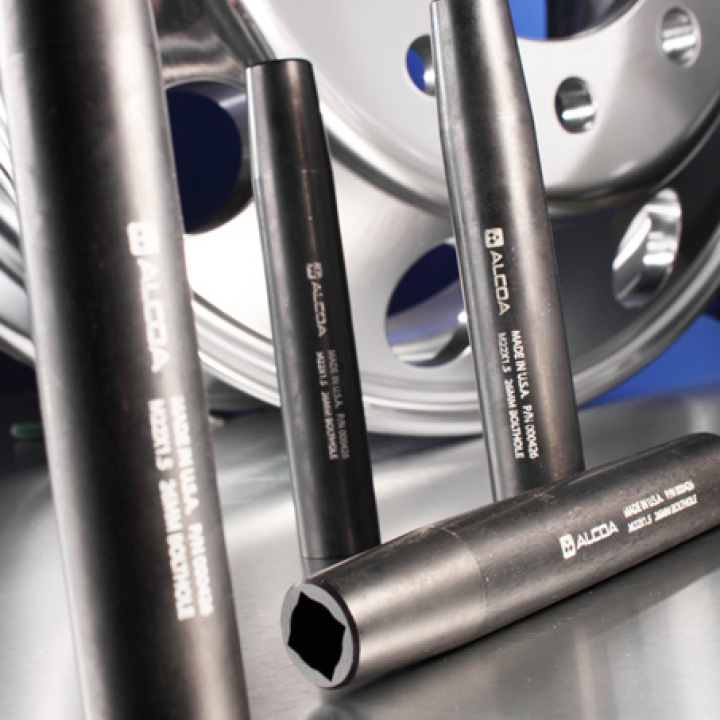
Alcoa EZ Mount Wheel Alignment Sleeves next to an Alcoa Wheel

Alcoa® Wheels’ genuine E-Z Mount Wheel Alignment Sleeves (Part Number 000426) were designed to support the wheel mounting process and assist in lining up wheel end components for ease of installation. They may also help seat a brake drum.

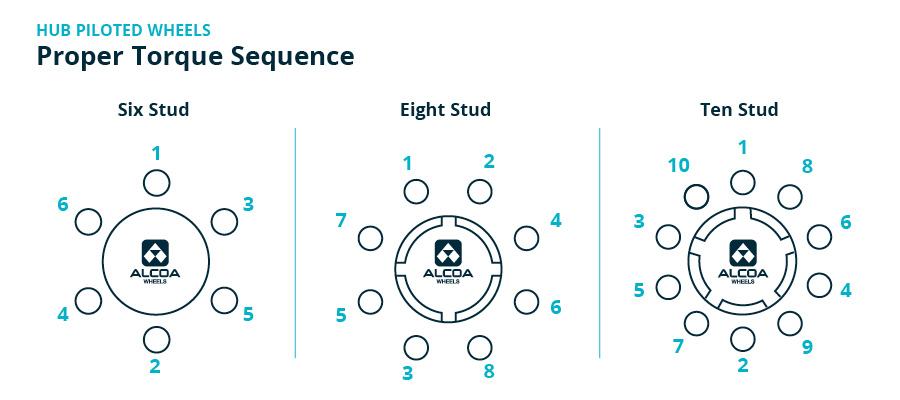
HOW TO: PROPER TORQUE SEQUENCE

Getting it right first time will help prevent wheel troubles and save on unnecessary wheel repairs and replacements. Download and print out one page factsheet below to keep on hand as a quick reference.

Alcoa Wheels proper torqueing procedure
  1. Position one of the hub’s pilot pads at the twelve o’clock position, installing the wheel nuts hand tight. Then move to the bottom (6 o’clock), then in a criss-cross pattern until complete.
  2. After positioning wheels on the pilot pads, hand tighten all two-piece flange nuts.
  3. Next, tighten to the recommended torque following the proper sequence shown above for your wheel type.
  4. After a wheel assembly has been installed and torqued, check the fastener torque again within 5 – 100 kilometres. Individual fleet conditions will influence the mileage interval.
HOW TO: MORE TORQUE TIPS

Type of torque wrenches. The dowel indicator type torque wrenches help indicate if there is movement while the clicker type torque wrenches will not indicate if there is movement. Breakaway torque wrenches work similarly to the clicker torque wrenches.

The right methods and numbers. The “good enough, tight enough method” is NOT recommended.

Brad Clegg, NSW State Sales Manager for Alcoa Wheels says customers talk with him a fair bit about torqueing:  “An Alcoa wheel has the correct torqueing pressure stamped on the wheel where the Alcoa Roll Stamp is, so when tightening a wheel you can reference this.”

Setting the torque wrench guns to the highest setting is going to damage the fasteners.

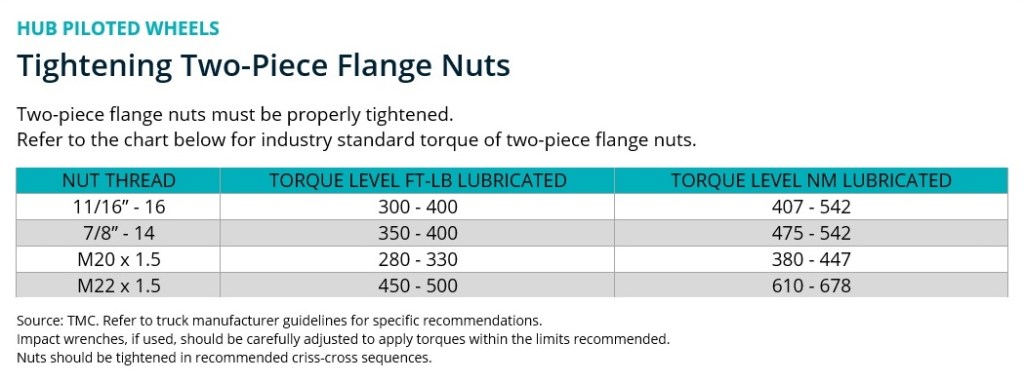
The correct method is to hand tighten the two-piece flange nuts, then tighten to the recommended torque with your calibrated torque wrench. The wheel nut MUST move 1/4 turn before arriving at final torque.

Over-torqueing is just as damaging as under-torqueing.

Chart showing Alcoa Wheels torgue standard in lbs and nm

Test drive. Following the wheel installation, a 5km test drive is recommended. You want to see what you need to do to get a little movement in that joint and if there is, in fact, any movement there. If done right, there will not be any movement, and you’re ready to roll.

Always refer to the Alcoa Wheels Service Manual.

Listen to more expert Torque talk over at the Behind the Wheels Podcast:

This content requires certain cookies to function. Please accept cookies in order to continue. You may need to refresh your browser window afterwards.

Make Sure It’s An Alcoa® Wheel
Two Alcoa Ultra ONE Wheels next to each other facing straight and side on

To spec your wheels, ring phone-icon 1800 955 191 to talk with our wheel experts, or fill out a contact form and we will reach out to you to answer your questions and discuss your specifications.

April 1, 2021

3 Tell-tale Warning Signs Your Wheels Are Feeling the Heat

When running a time critical business, conducting necessary wheel safety checks maybe neglected or put on the back burner in favour of tyre maintenance.

We have found that few people understand the integral part the wheel plays in overall maintenance, and so we’ve put together some professional guidelines to ensure your vehicle is running on a safe and reliable foundation.

As tyres age, the heat generated from road friction causes tyres to become brittle. Rubber can crack, split or leak, regardless of how much tread is on the tyre. When it comes to the wheel, significant events such as excessive heat from fire, brake malfunction, wheel bearing failure and other sources can weaken the metal, causing the tyre/wheel assembly to explode. Therefore, it is important to schedule wheel maintenance checks regularly.

According to Howmet Wheel Systems Managing Director, Ross Simmons: “General wheel checks should be carried out at least once a month, with a full detailed check on, for example, tyre age, kilometres travelled, pressure level and tread, four times a year – particularly prior to and after the summer months, as the high temperatures can add stress to the tyres and wheels.”

The Tell-Tale Warning Signs to Look For

Here are the three main ways to tell if your wheel has been excessively exposed to excessive heat:

  1. Charred or burnt in appearance.
  2. Discolouration of the wheel – appearing dull and greyish in colour and will not polish to a bright finish as a typical wheel would.
  3. Blistered, blackened or cracked looking labels or logos.

NOTE: IF ANY OF THE ABOVE CONDITIONS ARE SEEN, REMOVE THE ENTIRE ASSEMBLY, INCLUDING THE WHEEL, FROM SERVICE IMMEDIATELY AND PERFORM DIMENSIONAL CHECKS PER SECTION 3-4 IN THE ALCOA® WHEEL SERVICE MANUAL. THIS INCLUDES ANY HEAT DAMAGE TO THE TYRE, DISCOLORATION TO THE WHEEL AND/OR BRAKE DRUM, AND ANY BURNT OR CHARRED LABELS.

Alcoa Wheel showing tyre bead heat indicator
Normal tyre bead with no heat damage.

Even if a wheel does not appear to be obviously burnt, inspect the labels, tyre bead, and brake components for evidence of charring, melting, blistering or burning. Also check for discolouration to the brake drum.

Alcoa wheels manufactured from January 2009 will have a 2.5cm clear round heat indicator sticker located at the wheel flange next to the roll stamp, as well as a similar sticker located on the tyre side drop well close to the valve.

Alcoa Wheel showing heat indicator sticker at the wheel flange

“Don’t be mistaken by a clean wheel either,” says Simmons. “A wheel that has been exposed to excessive heat may appear to be in good condition if cleaned.”

The heat indicator sticker will activate and blister or have a blackened appearance when exposed to excessive heat.

Alcoa Wheel showing tyre bead heat indicator after heat damage
Heat activated indicator sticker showing exposure to excessive heat.

“If any wheel has been exposed to excessive heat, do not attempt to mount and inflate a tyre showing any of the 3 warning signs, it must be immediately and permanently removed from service,” Simmons recommends.

Conducting regular wheel maintenance checks is not only necessary for your business but extremely important to your safety and the safety of your employees.

To download the full Service Manual for Alcoa Wheels visit the Wheel Service and Manual Fitment page on our website,

or to speak with a technical expert on conducting wheel maintenance for maximum safety and efficiency,

call us on phone-icon 1800 955 191 – we are always here to help.

Make Sure It’s An Alcoa® Wheel
Two Alcoa Ultra ONE Wheels next to each other facing straight and side on

To spec your wheels, ring phone-icon 1800 955 191 to talk with our wheel experts, or fill out a contact form and we will reach out to you to answer your questions and discuss your specifications.

March 15, 2021

Tipping in Favour of Bigger Payloads With Lighter Wheels

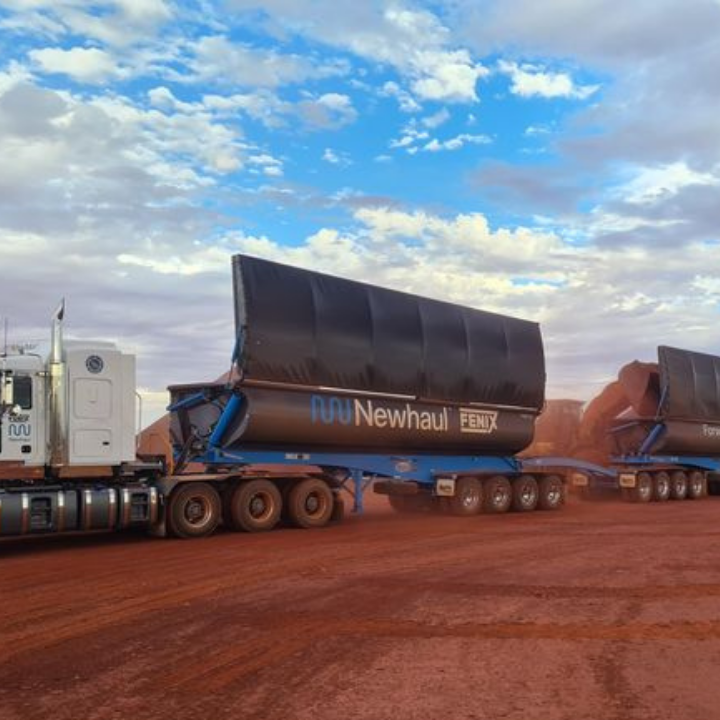
When the Fenix Newhaul JV (Fenix Resources and Newhaul) partnered up to move 1.3 million tonnes per annum of high-grade ore from their Iron Ridge project to the Geraldton port, they needed reliable and durable equipment for the project.

At some 490km, the haul distance is longer than other mines. And a longer haul distance means more maintenance and increased costs.

Elevated operating costs across the mining industry due to those long distances on tough roads and in harsh conditions makes optimising payload capacity an important decision.

Bruce Rock Engineering are no stranger to servicing this industry and were contracted by the Fenix Newhaul JV to build for them a fleet of PBS approved side tipping quad axle triple road trains.

With a payload up to 120t carried on 3 trailers per truck, these road trains haul iron ore from their Iron Ridge Mine, 67 kilometres north of Cue (in the Merchison), to the port of Geraldton.

Road train of side tipping trailers with Alcoa Ultra ONE wheels

Designed and tested in the tough conditions of the Pilbara region of Western Australia, Bruce Rock’s side tippers are fitted with Alcoa Ultra ONE wheels for their durability.

The trailers are engineered to keep payloads up and maintenance down, and boast quick and easy operation with simple, accessible hydraulic systems that help keep trailers on the road and down time to a minimum. With tare weights ranging from 6.5-8.5 tonnes, the tippers have been customised to suit what Fenix Newhaul JV were looking for.

Bruce Rock’s road train trailers are built and rigorously tested to weather some of the harshest environments encountered by the heavy hauling industry, especially the mining sector, and this is factored into every aspect of their design and build – right down to the wheels.

Lightening the Wheel to Increase the Load

Howmet Wheel Systems, the Australian Distributor for Alcoa® Wheels, who have recently released their lightest wheel in the market, the Ultra ONE® wheel, were approached to supply the 18kg wheels for the trailer build.

This is a great fit with Bruce Rock Engineering’s dedication to manufacturing trailers and other custom transport equipment with some of the lowest tare weights in Australia.

The only way to boost payload capacity is to take weight off the trailer, and using lighter wheels that meet gross axle weight rating requirements can make a difference by a couple of hundred kilos, depending on the number of axles (and therefore, wheels) on the rig.

“Optimizing tare weight of our trailers is a cornerstone of what we do at BRE,” says Keenan Verhoogt, Bruce Rock Engineering’s Tyre & Mechanical Manager. “Using lighter, stronger materials like Alcoa’s Ultra series of wheels means significant productivity gains for our customers”.

Added Strength to Match Added Payload

Combining lightweight, strength and durability is behind Howmet’s commitment to helping fleet owners and OEMs optimise their bottom line. Alcoa Wheels are forged with MagnaForce® alloy – the strongest alloy on the market yet – making them 17 percent stronger than the industry standard alloy, which allows for lighter wheels without compromising on their strength.

The wheels’ patent-pending ‘Hub Bore Technology’, which reduces the hub-to-wheel contact area by up to 64% versus other aluminium wheels on the market, means there is less surface area exposed for corrosion to form, therefore adding to the equipment’s reduced maintenance labour cost, with wheel removal becoming quicker and easier, too.

Teaming up with OEMs like Bruce Rock Engineering to bring reliable equipment to market supports Howmet Wheel Systems’ drive to help fleet owners and OEMs optimise their and their customers’ bottom line.

This article has also been published in Big Rigs National Road Transport Newspaper (Issue: 5 March 2021)

Make Sure It’s An Alcoa® Wheel
Alcoa Ultra ONE Wheel with hub cover casting a shadow

Our customers range from large OEMs like Bruce Rock Engineering to small-medium fleet owners. When buying a new trailer for your operation, consider Alcoa Wheels as a long term option.

To spec your wheels, ring phone-icon 1800 955 191 to talk with our wheel experts, or fill out a contact form and we will reach out to you to answer your questions and discuss your specifications.

March 5, 2021